- Family owned since 2011
Hail Damage Roof Inspection in Rapid City, SD: What It Covers & What Adjusters Look For
2,000+
Five-Star Reviews
5,000+
Projects Completed
15 Years
In Business
24/7
Emergency Response

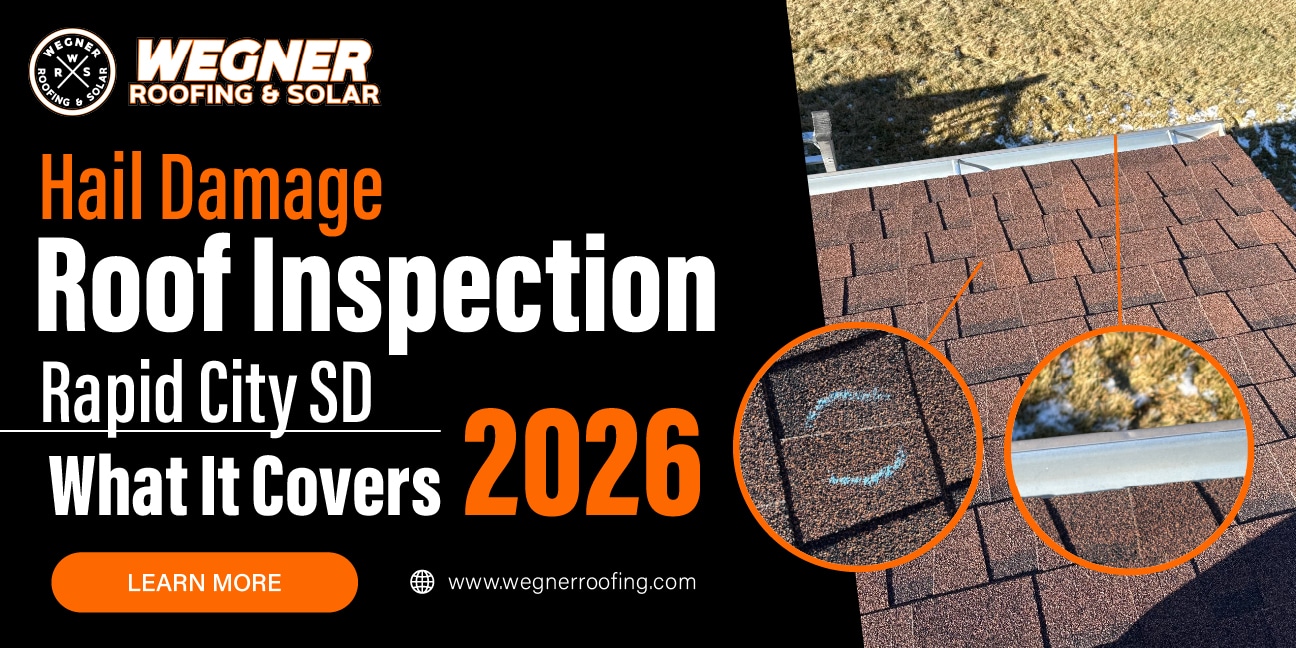
A hail damage roof inspection in Rapid City checks three things every insurance adjuster looks for: the shingle mat itself, the soft metals around vents and flashing, and the strike density across each roof plane. Most of that damage is invisible from your driveway, which is exactly why so many homeowners underestimate what a storm actually did. If you’re reading this within a day or two of a Black Hills hailstorm, here’s exactly what a real inspection finds, what it costs, and why the timing matters more than most homeowners realize.
Rapid City sits inside South Dakota’s hail corridor at just over 3,200 feet of elevation, which means storms here hit harder and more often than in flatter, lower markets. A single spring or summer afternoon can knock years off a roof’s usable life. Knowing what an inspection is supposed to find, before you ever call your insurer, protects both your roof and your claim.
Not sure if your roof took a hit? Schedule a free hail damage roof inspection with our Rapid City team today and get a documented photo report within 24 hours, no obligation to file a claim.
What Does a Hail Damage Roof Inspection Actually Cover?
A thorough inspection covers three specific zones: the shingle roof plane, the soft metals (flashing, vents, gutter aprons), and a hit-count map across every slope. Each zone gets documented separately because insurers evaluate them differently.
The Roof Plane: Shingle Mat Fractures and Granule Loss
Asphalt shingles are built around a fiberglass mat coated in asphalt and granules. A direct hailstrike can fracture that mat beneath the surface, creating what roofers call a ‘bruise.’ According to independent hail impact testing standards, a bruised shingle often looks completely normal from the ground; it feels slightly spongy when pressed, and it has already lost a measurable percentage of its expected service life. A shingle rated for 25 years of UV protection can drop to 8 to 10 years of remaining life after a moderate hail event, even with zero visible cracking.
Granule loss is the second marker. Hail knocks the protective granule layer off the shingle surface, exposing the raw asphalt underneath to direct UV. Once that asphalt is exposed, degradation accelerates fast, particularly at Rapid City’s elevation, where UV intensity runs measurably higher than at sea level.
Soft Metals: Vents, Flashing, Valleys, and Gutter Aprons
Hail dents metal before it visibly damages shingles, which makes soft metal the single best “tell” an inspector uses. Roof vents, valley metal, chimney flashing, and gutter aprons are all softer than the surrounding shingle field, so a hailstone that barely marks a shingle will leave a clear circular dent in a vent cap or gutter apron.
Insurance adjusters specifically look for dime-sized to golf-ball-sized dents in soft metal as physical proof of storm size and impact force, which is why a roof with damaged vents but seemingly intact shingles can still qualify for a full claim.
Strike Density Mapping: Why Insurers Count Hits Per Test Square
Here’s the detail most homeowner-facing content skips entirely: insurance adjusters don’t evaluate your whole roof at once. They mark off a 100-square-foot “test square” on each slope and count individual hail hits inside that square. Most South Dakota carriers use a threshold of roughly 8 to 10 hits per test square on a slope before that slope qualifies for replacement rather than spot repair.
A north-facing slope that took a direct hit from a storm moving south to north might show 15 hits per square, while the opposite slope shows only 2 or 3. That’s why a full roof inspection maps every plane separately instead of eyeballing the whole roof from one ladder position. If an inspection does reveal enough hits to warrant a replacement, your next step is understanding how your insurance policy will handle the payout, a process we break down completely in our Rapid City ACV vs RCV Roof Insurance Claims Guide.

The Hidden Threat of Invisible Hail Damage
Most hail damage that matters to an insurance claim happens beneath the shingle surface or in small metal components too far away to see clearly from a driveway or ladder glance. A trained inspector physically walking the roof plane is the only reliable way to confirm it.
Here’s a side-by-side comparison of what “looks fine” versus what an on-roof inspection actually reveals:
What You See From the Ground | What an On-Roof Inspection Finds |
Roof looks uniform, no missing shingles | Bruised mat with fractured fiberglass underneath, invisible until pressed |
Gutters look “a little dinged” | Dime-to-quarter-sized dents consistent with hail size and storm date |
No obvious leaks yet | Cracked pipe boots or lifted seal lines that will leak within one to two storm seasons |
Shingles appear the same color | Granule loss exposing bare asphalt in patches only visible from directly above |
Vents and flashing look intact | Small dents in soft metal that confirm storm-force impact for the adjuster |
A hypothetical case worth understanding: Imagine a home off Skyline Drive that took a hailstorm in late May. From the street, the roof looks untouched; no missing shingles, no visible cracks. An on-roof inspection finds 11 hits per test square on the west-facing slope (the side that caught the storm’s direct path) and only 3 on the east-facing slope. Soft metal on the west-facing gutter apron shows five dime-sized dents.
That single data set is what turns “the roof looks fine” into “this qualifies for a covered claim,” because the adjuster now has documented, storm-specific proof rather than a homeowner’s opinion.
How Soon After a Black Hills Hailstorm Should You Get Inspected?
Because of Rapid City’s 3,200-foot elevation, hailstorms strike with higher velocity than in lower-altitude areas, a pattern confirmed by NWS Rapid City’s severe weather climatology data. Book an inspection within 48 hours of the storm if possible, and no later than one to two weeks after. Waiting longer gives insurers room to argue that the damage came from a different, later storm or from normal wear rather than the event you’re claiming.
The 48-Hour Documentation Window
The first two days after a storm are when evidence is freshest and easiest to tie directly to a specific weather event. Date-stamped photos, an inspection report logged close to the storm date, and undisturbed debris (branches, granules in the downspout) all strengthen your claim’s timeline. This doesn’t mean you have to file within 48 hours; it means the inspection and documentation should happen fast, even if you decide to file later.
Why Waiting Weakens a Claim
The longer a roof sits uninspected, the more an insurer can plausibly claim the damage is unrelated to your reported storm date, especially in a region like Rapid City that sees multiple hail events across a single season. A bruised shingle mat that goes uninspected for months can also progress into an active leak, at which point you’re dealing with interior water damage on top of the original roof claim, a more complicated and more expensive situation to document and settle.
Does a Hail Damage Inspection Cover Siding and Windows Too?
Yes, a complete post-storm inspection should include siding and window screens, not just the roof. Hail that’s strong enough to dent a roof vent is also strong enough to crack vinyl siding, dent fiber cement panels, and tear window screens, and insurers evaluate exterior claims as a whole property event, not a roof-only event.
What Hail Does to Vinyl and Fiber Cement Siding
Vinyl siding cracks or develops small round impact holes when struck at the wrong angle by larger hail. Fiber cement siding, increasingly common on Rapid City homes for its durability, can chip or spall at the impact point, which compromises the protective coating underneath. Both types of damage tend to cluster on the storm-facing side of the home, mirroring the same directional pattern you’d see on the roof.
Window Screen and Frame Impact Signs
Torn window screens are one of the easiest, most overlooked hail indicators. If a screen has small tears or punctures in a scattered pattern, that’s consistent evidence of hail size and force, useful corroborating detail even if the window glass itself is undamaged. Frame damage, particularly on west and north-facing exposures common on hillside lots, should be checked as part of the same visit.
Why a Full Exterior Assessment Protects Your Full Claim
Filing separate, disconnected claims for roof, siding, and windows creates more paperwork and more chances for an adjuster to question consistency between them. A single, full-property inspection that documents roof, siding, and window damage together, tied to one storm date, gives you one coherent claim narrative instead of three fragmented ones.
What Happens During the Inspection Itself, Step by Step?
Knowing what to expect can make the post-storm recovery process much less stressful for homeowners. When you work with a trusted Rapid City roofing contractor, they will follow a meticulous, fully documented process to ensure no detail is overlooked.
- Ground-level documentation (10 to 15 minutes): The inspector photographs gutters, downspouts, AC fins, window screens, and any fallen debris before ever climbing a ladder. This establishes a baseline.
- On-roof plane-by-plane mapping (30 to 45 minutes depending on roof size): Each slope gets walked and photographed separately, with hit-count and soft metal condition logged per plane rather than for the roof as a whole.
- Seal line and flashing check (10 to 15 minutes): Ridge caps, valleys, and flashing around chimneys or skylights get checked for lifted seals or thermal-stress cracking, both common after Rapid City’s chinook wind swings.
- Photo packet assembly (same day or next business day): You receive a documented report regardless of whether you decide to file, covering every zone above.
Neighborhood Notes: Inspecting Homes From Canyon Lake to Box Elder
West Rapid and Skyline Drive Hillside Exposure
Homes on the hillside lots along Skyline Drive and throughout West Rapid sit more directly exposed to chinook wind events rolling down off the Black Hills. That exposure means wind-driven hail often strikes at a sharper angle than it would on a flat lot, which changes where impact damage clusters on the roof. For the team at Wegner Roofing Rapid City, an inspection on a Skyline Drive home typically pays closer attention to the windward slope for exactly this reason.
Box Elder and Summerset Wind Corridor Considerations
Box Elder and Summerset sit along a wind corridor east of the city that regularly sees straight-line gusts during summer thunderstorm season, in addition to hail. Homes in this corridor tend to show more wind-lift damage at the shingle edges and ridge lines alongside hail impact, so an inspection here checks both hail strike density and shingle seal integrity along every ridge and hip.
Does an Inspection Cost Anything in Rapid City?
No. A post-storm inspection is free with no dispatch fee and no obligation to file a claim or hire a roof contractor afterward. You keep the documented photo packet either way.
What "Free" Actually Means
“Free” means exactly that: no charge to climb the roof, no charge to walk the property, and no charge for the photo report you’re handed at the end. It doesn’t mean pressure to sign anything. A legitimate local inspector will tell you honestly if your roof doesn’t have enough damage to justify a claim, which protects your future claim history from an unnecessary filing.
If you’d rather start directly with a full assessment and insurance walkthrough, our storm and hail damage repair page covers the entire claims process from filing through the adjuster meeting.
Frequently Asked Questions
What does a hail damage roof inspection cover?
A hail damage inspection covers the shingle mat for bruising, soft metals like vents and flashing for dents, and a hit-count map across every roof slope. It’s the combination of these three data points, not a single glance, that determines whether a slope qualifies for insurance coverage.
Should siding and windows be inspected after hail too?
Yes. Hail strong enough to dent a roof vent typically also damages vinyl or fiber cement siding and tears window screens. A single combined inspection covering roof, siding, and windows creates one consistent claim narrative instead of three separate, harder-to-verify ones.
How soon after a hailstorm should a roof be inspected?
Within 48 hours is ideal, and no later than one to two weeks. Fresh documentation ties damage clearly to a specific storm date, which matters because insurers can dispute claims filed long after the event as unrelated aging or a separate storm.
Does hail damage always show visible signs from ground level?
No, in most cases. Fractured shingle mats, granule loss, and small soft-metal dents are rarely visible from a driveway or even a ladder glance. Only a trained inspector walking each roof plane directly can confirm the damage an adjuster needs to see.
Does a hail inspection cost anything?
No, a legitimate post-storm inspection is free with no dispatch fee and no obligation to file or hire anyone. You should receive a documented photo report regardless of what you decide to do next.
Your Next Step After a Storm
The window between a severe storm and securing a well-documented claim is shorter than most homeowners realize. A thorough hail damage roof inspection is the only reliable way to uncover hidden mat fractures, soft metal dents, and strike density before they escalate into costly interior leaks. If you want to understand the complete recovery process, our comprehensive library of resources covers all the details you need to make informed decisions about your property.
Dealing with post-storm anxiety is completely overwhelming, but you do not have to navigate the aftermath alone. Let us take the uncertainty off your shoulders. Reach out to Wegner Roofing & Solar today to schedule your thorough assessment. Our local experts will provide you with clear, honest answers and a complete photo report, ensuring your home remains safe and protected for years to come.
Get Your Free Estimate